Follow the bitcoin. Keep the proof.
Chain Tracker is a research and education project about tracing Bitcoin: how money moves on a public ledger, how investigators follow it, and how findings are documented so they hold up.
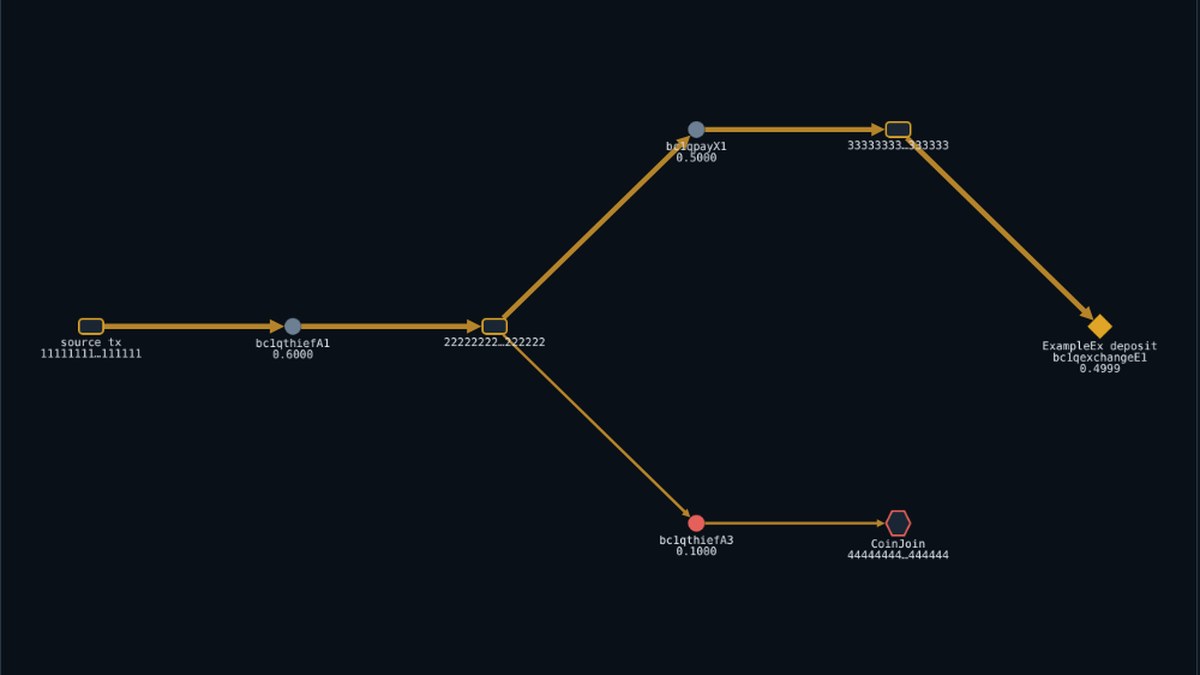
Every Bitcoin payment is public. Names are not.
The blockchain records every transaction ever made, but only as addresses. Tracing is the work of getting from “this address paid that one” to an account a real person controls. Chain Tracker is the software built here to do that work, using published forensic methods.
Wallet exploration
Balances, full history, current holdings and top counterparties for any address or wallet.
Address clustering
Groups the addresses one person or business likely controls. Every link cites the transaction that supports it.
Fund tracing
Follows a specific amount forward, hop by hop, to exchanges, mixers or unspent holdings, using a stated method.
Preserved evidence
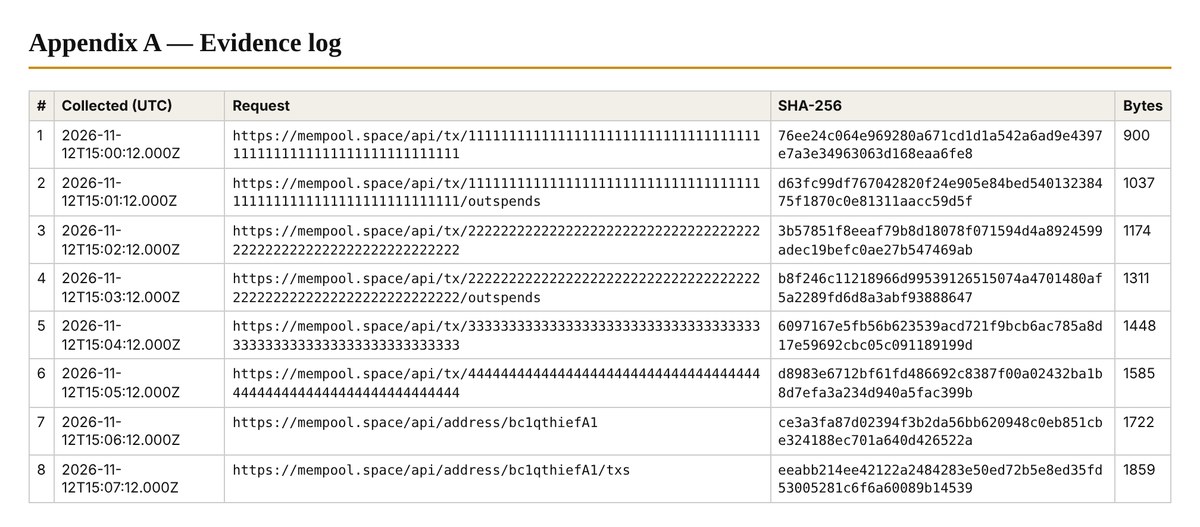
Every blockchain record is stored unaltered and fingerprinted with SHA-256, so the data can be shown to be unchanged.
Where tracing makes a difference
- Divorce and family law. Bitcoin left off a financial disclosure.
- Probate and estates. Holdings a family knows exist but can’t find.
- Bankruptcy. Assets moved before or during a filing.
- Fraud and scams. Where stolen funds went, and which exchange can identify the account.
- Missing deposits. Whether a payment confirmed, and whether it reached the right address.
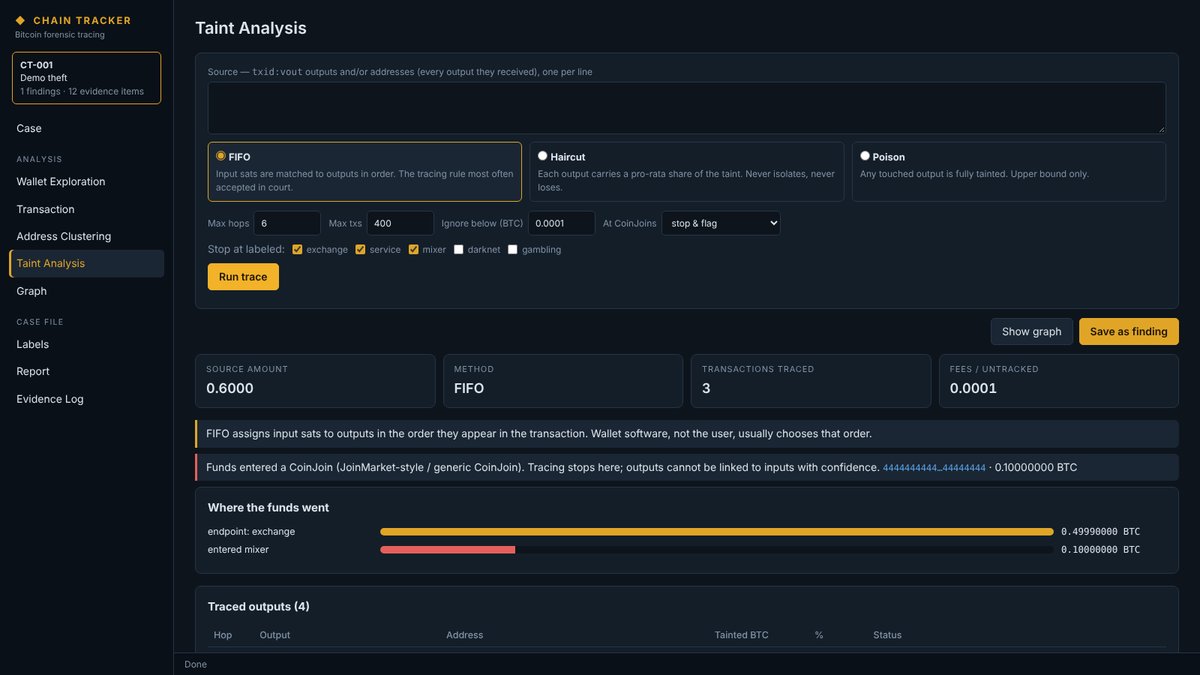
From one transaction to the end of the trail
Start from known facts
A transaction ID, an address, an amount and a date, confirmed against more than one source before any tracing begins.
Follow and group
Funds are followed hop by hop, and addresses that are spent together are grouped as one likely owner, with the evidence for each link.
Document and preserve
Findings, methods and limits go into a written report, with every blockchain record stored and fingerprinted.
What blockchain tracing can’t do
Crypto “recovery” scams target people who have already lost money. Knowing what tracing can and can’t do is the best protection.
- It can’t name a person by itself. Exchanges identify account holders, through legal process.
- It can’t see through mixers. A trace stops there, and an honest report says so.
- It can’t recover funds. Anyone who guarantees recovery, or asks for a “release” fee, is very likely running a scam.
- It can’t see off-chain moves, such as transfers inside an exchange or over the Lightning Network.
Start with the fundamentals
Three short narrated explainers: what tracing is, how inputs and outputs work, and why investigators run their own node.